
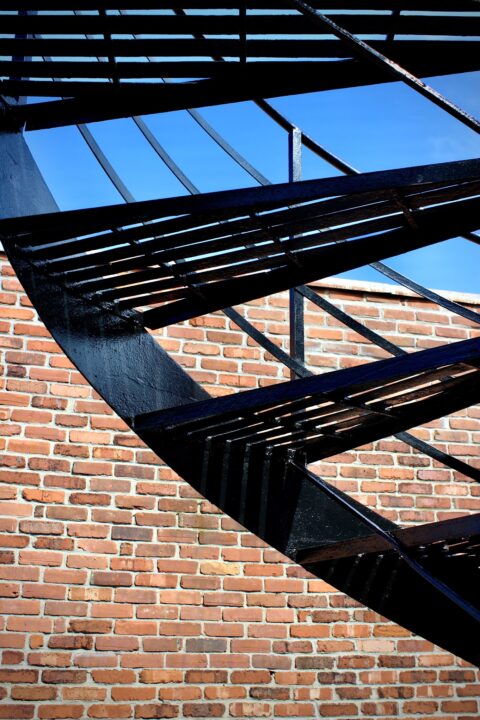
When a wrought iron railing, staircase or fence starts to peel, the first instinct is often to grab a can of paint at the hardware store and add a fresh coat. Yet the type of paint used during a restoration completely changes how long the result lasts. Between a standard consumer paint and an industrial coating formulated for harsh environments, the difference in protection is considerable, especially in a climate like Quebec’s. Before choosing, it’s worth understanding what really sets these two product families apart: how they protect against corrosion, how well they resist rust, how often they need maintenance and, ultimately, what they really cost over several years. That’s exactly what this article compares, with tables to back it up.
Industrial Paint vs Standard Paint: What’s the Real Difference?
Standard paint refers to decorative products sold to the general public: alkyd or latex paints designed first and foremost for appearance and applied in one or two coats. They provide surface protection, but their formulation isn’t designed to withstand long-term oxidation of exterior metal exposed to the elements.
Industrial paint, on the other hand, is part of a complete system: a high-solids primer, an anti-corrosion barrier coat, then a finish coat (often epoxy or polyurethane). Each layer plays a specific role. This type of system is used in commercial and industrial painting precisely because it’s designed to protect steel exposed to weather, de-icing salt and temperature swings. So the difference isn’t just a matter of brand or price: it’s a completely different approach to protection.
Differences in Corrosion Protection
The most important distinction lies in the moisture barrier. Standard paint forms a single film: if that film cracks, water reaches the metal directly and rust sets in underneath the paint. An industrial system works through complementary layers that keep protecting the metal even when there’s minor damage.
Here’s what each layer contributes, and what standard paint does or doesn’t offer by comparison:
| System layer | Role | Standard paint | Industrial paint |
|---|---|---|---|
| Anti-corrosion primer | Protects the metal, slows rust | Often skipped or basic primer | High-solids primer |
| Barrier coat | Blocks water and oxygen | Single film | Dedicated waterproofing layer |
| Finish coat | Resists UV, salt and abrasion | Varies, fades quickly | Durable epoxy or polyurethane |
This layered approach explains why a professional restoration always starts with proper surface preparation and the right primer, as detailed in our wrought iron restoration guide.
Rust Resistance: What Really Sets Them Apart
In the field, the difference shows after two or three winters. Standard paint applied to poorly prepared metal tends to lose its adhesion: it blisters, then peels, and rust returns wherever water has seeped in. The problem isn’t just cosmetic. It weakens the structure and complicates the next restoration, since the failing coat has to be removed before starting over.
Industrial paint stays flexible and well bonded through freeze-thaw cycles, which limits cracking. Combined with an anti-corrosion primer, it stops rust from spreading under the film. That’s what makes it possible to prevent corrosion rather than just hide it, a particularly important point for surfaces exposed to salt in winter.
Maintenance Frequency and Lifespan
The product you choose has a direct impact on the maintenance you’ll need to plan for. Standard paint requires frequent touch-ups, especially on high-traffic areas like stair treads. An industrial system, by contrast, significantly extends the time between interventions.
| Surface type | Standard paint | Industrial paint |
|---|---|---|
| Fence or guardrail | Repaint every 3 to 4 years | Maintenance every 6 to 8 years |
| Stair railing | Repaint every 2 to 3 years | Maintenance every 4 to 6 years |
| Steps exposed to salt | Repaint after 1 to 2 years | Maintenance every 2 to 3 years |
In other words, an industrial system often doubles the lifespan, not to mention that occasional touch-ups are easier to perform on a properly applied system.
Comparison: Industrial Paint vs Standard Paint
| Option | Cost | Durability | Result |
|---|---|---|---|
| Standard paint | $2,500 to $5,000 | 1 to 3 years | Refreshed look in the short term, rust often returns |
| Industrial paint (complete system) | $5,000 to $25,000 depending on scope | 5 to 8 years | Long-lasting corrosion protection and uniform finish |
Typical Wrought Iron Restoration Cases
Some structures almost always justify an industrial system because of their exposure. Exterior staircases top the list: hit by salt and moisture all winter long, they’re the first to show peeling on the steps. Metal balconies follow closely, since water collects in the corners and starts the corrosion process.
Railings and guardrails need regular maintenance as much for appearance as for safety, since advanced corrosion weakens the anchor points. Finally, wrought iron fences, permanently exposed to sun, rain and snow, undergo a gradual breakdown of their protective film that calls for a durable product rather than a simple cosmetic touch-up.
When Is Each Option the Right Choice?
Standard paint can work for a temporary refresh of a surface in good condition, with no rust, when the goal is purely cosmetic and short term. As soon as rust is present, the surface is directly exposed to de-icing salt, or you want to protect the structure for the long haul, an industrial system becomes the logical choice.
The best approach is still to have the actual condition of the metal assessed before deciding. A poorly planned restoration ends up costing you in repeat work; comparing a DIY job with a professional one can also help clarify your choice depending on the scope of the work.
Not sure which system is right for your wrought iron?
An on-site assessment can determine whether standard paint is enough or whether an industrial system is needed to protect your structures for the long term. Request your free quote or explore our wrought iron painting services.
FAQ: Industrial Paint and Wrought Iron Restoration
FAQ: Industrial Paint and Wrought Iron Restoration
Is industrial paint really more durable than standard paint?
Yes. Thanks to its multi-layer system (high-solids primer, barrier coat and finish coat), it protects the metal in depth and holds up better to freeze-thaw cycles. Its lifespan is generally 5 to 8 years, compared to 1 to 3 years for standard paint.
Can I apply industrial paint myself?
Some products are available in consumer versions, but the result depends mainly on how the metal is prepared and how the primer is applied. These systems are also often two-component products, which means following precise mixing ratios and carefully respecting the manufacturer’s technical data sheets. Without sanding, the right primer and exact mixing, even a good paint loses much of its protection.
Does standard paint damage wrought iron?
It doesn’t damage it directly, but it often hides rust without treating it. Corrosion can then keep spreading under the film, which complicates future restoration and can lead to replacing sections of metal.
How much should I budget to restore wrought iron with an industrial system?
The cost depends on the size of the structures and their condition. For a complete system including preparation, primer and finish, you should generally plan for between $5,000 and $25,000 depending on the scope of the work.
How often should exterior wrought iron be repainted?
With standard paint, it’s often every 1 to 3 years depending on exposure. With a properly applied industrial system, the maintenance interval generally stretches to 5 to 8 years, with simple spot touch-ups in between.














No comment yet, add your voice below!