
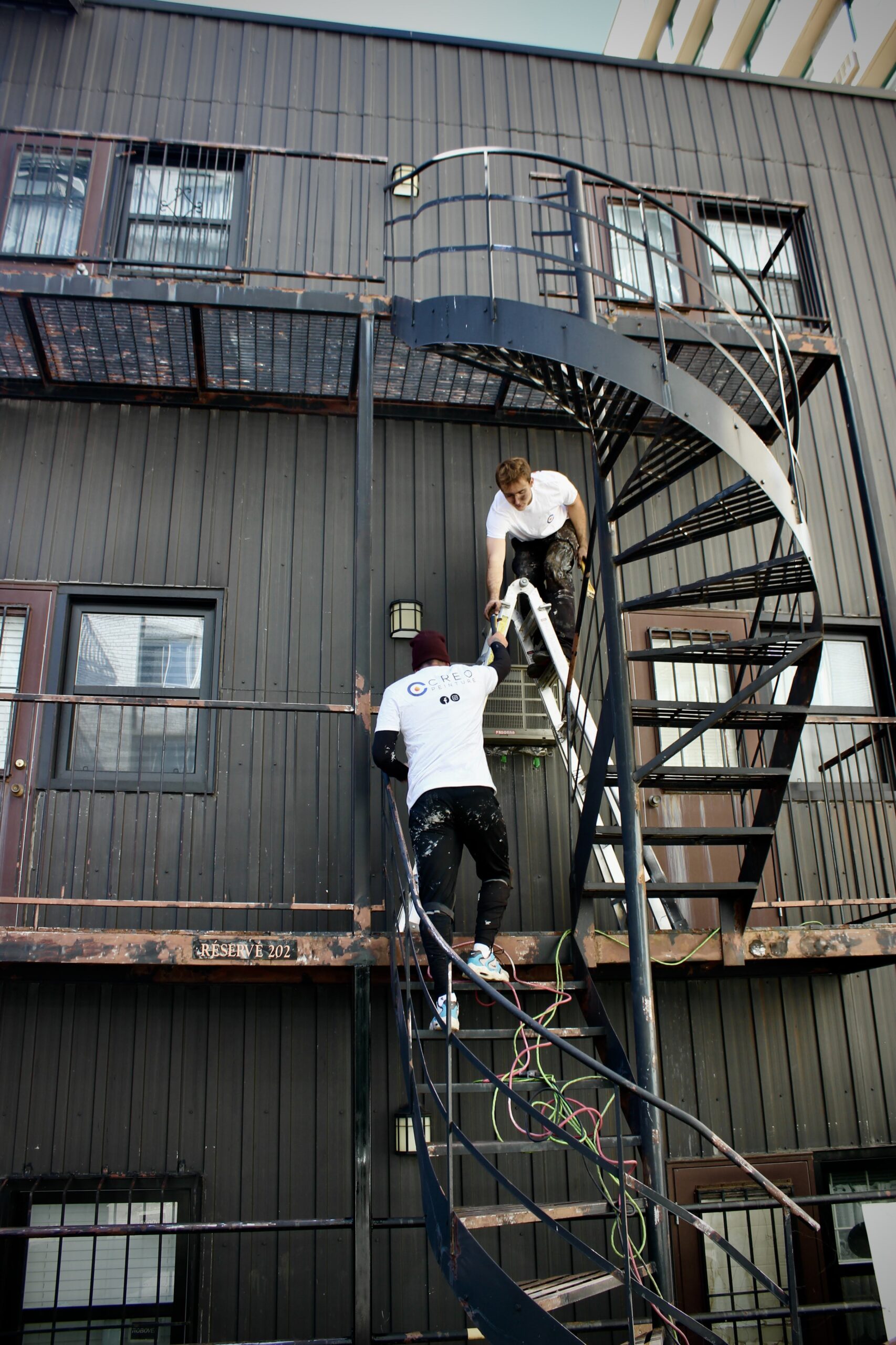
Staircases, railings, fences, guardrails: exterior wrought iron is among the most exposed elements of a property. Unlike siding or a roof, it tends to be forgotten until rust becomes visible. Yet simple, regular maintenance is enough, in most cases, to extend its lifespan by several years and avoid a premature full restoration.
Here’s what to actually watch for, the basic steps to repeat and, above all, how often to do them depending on the type of structure.
Why Exterior Wrought Iron Needs Regular Maintenance
Exterior metal is constantly exposed to humidity, UV rays, freeze-thaw cycles and de-icing salt in winter. Each of these factors gradually weakens the protective coating. Once that coating is compromised, even slightly, moisture reaches the metal and corrosion sets in. Preventive maintenance costs much less, in time and money, than a full restoration made necessary by neglect.
The Three Basic Steps to Repeat
- Clean the surface to remove dust, salt and residue that hold moisture against the metal.
- Inspect the most exposed areas visually (bottom of railings, weld joints, points of contact with the ground) to spot the first signs of rust.
- Touch up any area where the paint is peeling or fading quickly, before corrosion spreads underneath.
How Often to Step In Depending on the Type of Structure
Not all wrought iron structures wear at the same rate. Exposure to salt, standing water or direct foot traffic greatly changes the recommended maintenance frequency.
| Type of structure | Inspection frequency | Specific point to watch |
|---|---|---|
| Exterior fence | Once a year, in spring | Base of posts in contact with the ground |
| Balcony guardrail | 1 to 2 times a year | Anchor points and shaded areas |
| Stair railing | Twice a year (spring and fall) | Steps and high-contact areas |
| Staircase exposed to de-icing salt | Check after every winter | Base of steps and welds |
The Seasonal Maintenance Schedule
Beyond the frequency by type of structure, some tasks are best done at certain times of the year. Here’s how to spread maintenance across the four seasons.
| Season | What to do | Why |
|---|---|---|
| Spring | Full inspection and deep cleaning | Spot damage caused by winter salt and frost |
| Summer | Paint touch-ups on weakened areas | Dry conditions are ideal for product adhesion |
| Fall | Cleaning and protection before winter | Limit the impact of upcoming salt and moisture |
| Winter | Monitoring and careful de-icing around structures | Avoid salt building up directly on the metal |
What Happens If You Skip Maintenance
- Surface rust becomes visible within a few seasons, especially on areas exposed to salt.
- The paint blisters and peels, letting moisture seep directly under the protective coating.
- A full restoration eventually becomes necessary, when regular maintenance would have been enough to avoid it.
For a specific case, such as maintaining a wrought iron fence, the same principles apply, with particular attention to the base of the posts, which is more exposed to ground moisture.
Do the Maintenance Yourself or Hire a Professional?
Basic cleaning and inspection can easily be done yourself, with a bit of discipline and a clear schedule. However, as soon as a rusted area needs stripping or a complete protective coating needs to be redone, a professional ensures a uniform and lasting result. To better sort out what’s DIY and what calls for professional expertise, this comparison of both approaches is a good place to start.
Keep your wrought iron in good condition, year after year
A free quote lets you assess the current condition of your structures and plan the maintenance or restoration you need.
FAQ: Exterior Wrought Iron Maintenance
How often should exterior wrought iron be inspected?
At least once a year, ideally in spring. Highly exposed structures, such as staircases or railings in contact with de-icing salt, deserve an inspection twice a year.
Is cleaning alone enough to protect the metal?
Cleaning removes residue that holds moisture, but it doesn’t replace a protective coating in good condition. The two steps go hand in hand.
What products should be used for routine wrought iron maintenance?
Cleaning with soapy water is enough for basic maintenance. For touch-ups, a suitable anti-rust primer followed by a weather-resistant finish paint effectively protects small weakened areas.
Does de-icing salt really damage wrought iron?
Yes, it’s one of the most aggressive causes of corrosion for exterior metal. Limiting direct contact with the structures and cleaning in spring significantly reduces its impact.
How much can regular maintenance extend the lifespan of wrought iron?
Consistent maintenance (cleaning, inspection, spot touch-ups) can easily double the lifespan of a protective system, by preventing rust from setting in deeply.

What our customers say













No comment yet, add your voice below!