
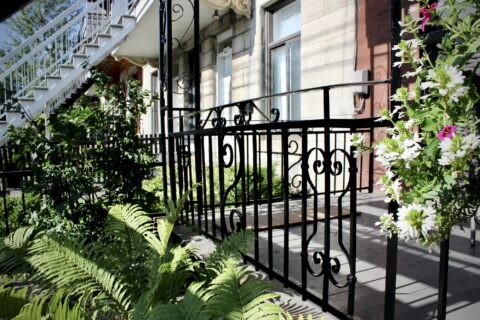
Wrought iron railings, balconies, fences and staircases add character to a building, but they’re also on the front line against the elements. In Quebec, between humidity, de-icing salt and freeze-thaw cycles, rust can set in within a few seasons if nothing is done. The good news is that with a few maintenance habits and the right protection, you can significantly extend the lifespan of these structures.
This article covers it all: why wrought iron rusts, how to spot the first signs, when to act preventively rather than correctively, what to watch for season after season, and which products to use to protect the metal for the long term.
Why Does Exterior Wrought Iron Rust? (The Causes of Corrosion)
Rust is an oxidation reaction: when metal is in prolonged contact with water and oxygen, it corrodes. Several factors speed up this process in Quebec’s climate:
- Humidity and rain, which seep in as soon as a crack appears in the paint.
- Freeze-thaw cycles, which make the metal expand and contract and cause the protective film to crack.
- De-icing salt, which is particularly aggressive on stairs and access ramps.
- UV rays, which weaken and fade older coats of paint.
Once the protective layer is compromised, corrosion can spread quickly under the paint. That’s why regular wrought iron maintenance makes all the difference to its longevity: you address the cause before it attacks the metal in depth.
Recognizing the First Signs of Rust
The earlier you step in, the simpler and more affordable the repair. Learning to read the condition of a surface tells you whether it just needs routine maintenance or whether the problem is getting worse. Here are the most common signs and what they mean.
| Sign observed | What it means | Urgency level |
|---|---|---|
| Dull or faded paint | UV wear, weakening film | Low: monitor |
| Small orange spots | Surface rust starting | Medium: treat quickly |
| Blisters or flaking | Water trapped under the paint | High: take action |
| Pitted or crumbling metal | Advanced corrosion, structure affected | Critical: full restoration |
Not sure about the condition of your wrought iron?
It’s better to have early rust checked than to wait for it to reach the structure. Request an assessment and get a clear picture of the work needed.
Prevention or Correction: When to Act?
The whole point is to step in at the right time. Acting preventively costs far less than fixing corrosion that has already set in. Here’s how to gauge the state of your structure and the matching intervention.
| Situation | Condition of the metal | Recommended action |
|---|---|---|
| Prevention | Paint intact, no visible rust | Annual cleaning and spot touch-ups |
| Minor correction | Small surface rust spots | Local sanding, rust primer, touch-up |
| Major correction | Widespread rust, flaking, blisters | Full stripping and anticorrosion system |
As soon as rust becomes widespread, a simple brushstroke is no longer enough: you need to strip and rebuild the protection in depth, as our wrought iron restoration guide explains. The choice of product also matters a lot at this stage.
Seasonal Maintenance: The Right Habits Through the Year
Exterior wrought iron is better protected when maintenance follows the seasons. A simple calendar catches problems before they get worse and spreads the work across the year instead of doing it all at once.
| Season | Key action | Why |
|---|---|---|
| Spring | Full inspection and cleaning | Spot winter damage (salt, frost) and early rust |
| Summer | Paint touch-ups and priming | Dry conditions ideal for good adhesion |
| Fall | Cleaning and protection before winter | Limit the effect of salt and winter moisture |
| Winter | Monitoring and careful de-icing | Avoid salt building up directly on the metal |
Spring is the most strategic moment: that’s when you see what winter left behind and plan your touch-ups before the warm season.
The Right Products to Protect Wrought Iron
Protecting a structure relies on a combination of products, each with a specific role. Using the right product at the right time saves a lot of redo work.
| Product | Role | When to use it |
|---|---|---|
| Rust converter | Stabilizes existing rust | On small spots before touch-up |
| Rust-inhibiting primer (zinc-rich) | Protective barrier for the metal | After prep, before the finish |
| Metal finish paint | Protects from UV, salt and water | Final coat, renew as needed |
One key point: skipping the primer to save time is the most common cause of rust coming back. It’s the coat that does the real protective work.
Real-World Example: An Exterior Staircase Exposed to Salt
Take a wrought iron staircase on a duplex, facing north and de-iced with salt every winter. After five years without maintenance, the original paint starts to blister on the steps and rust reaches the welds. A two-step intervention usually solves it: stripping the most affected steps, applying a zinc-rich primer, then a salt-resistant finish over the whole structure.
Typical result: a structure protected again for 8 to 12 years, with maintenance reduced to an annual inspection. The same staircase left untouched would likely have needed partial replacement of the corroded sections, a much bigger expense and a heavier job.
When to Call a Professional
Light maintenance (cleaning, small touch-ups) can absolutely be done yourself. But as soon as you need to strip the metal, treat structural rust points or rebuild a full anticorrosion system, a specialist ensures lasting protection and a uniform result.
Extend the lifespan of your wrought iron
An on-site assessment helps determine the right intervention, from a simple touch-up to a full restoration. Request your free quote for a clear picture of your project.
FAQ
How do you keep wrought iron from rusting?
How often should exterior wrought iron be maintained?
Can you stop rust that has already appeared?
Is winter salt really damaging to wrought iron?
Do you need a primer before painting wrought iron?

What our customers say












No comment yet, add your voice below!