
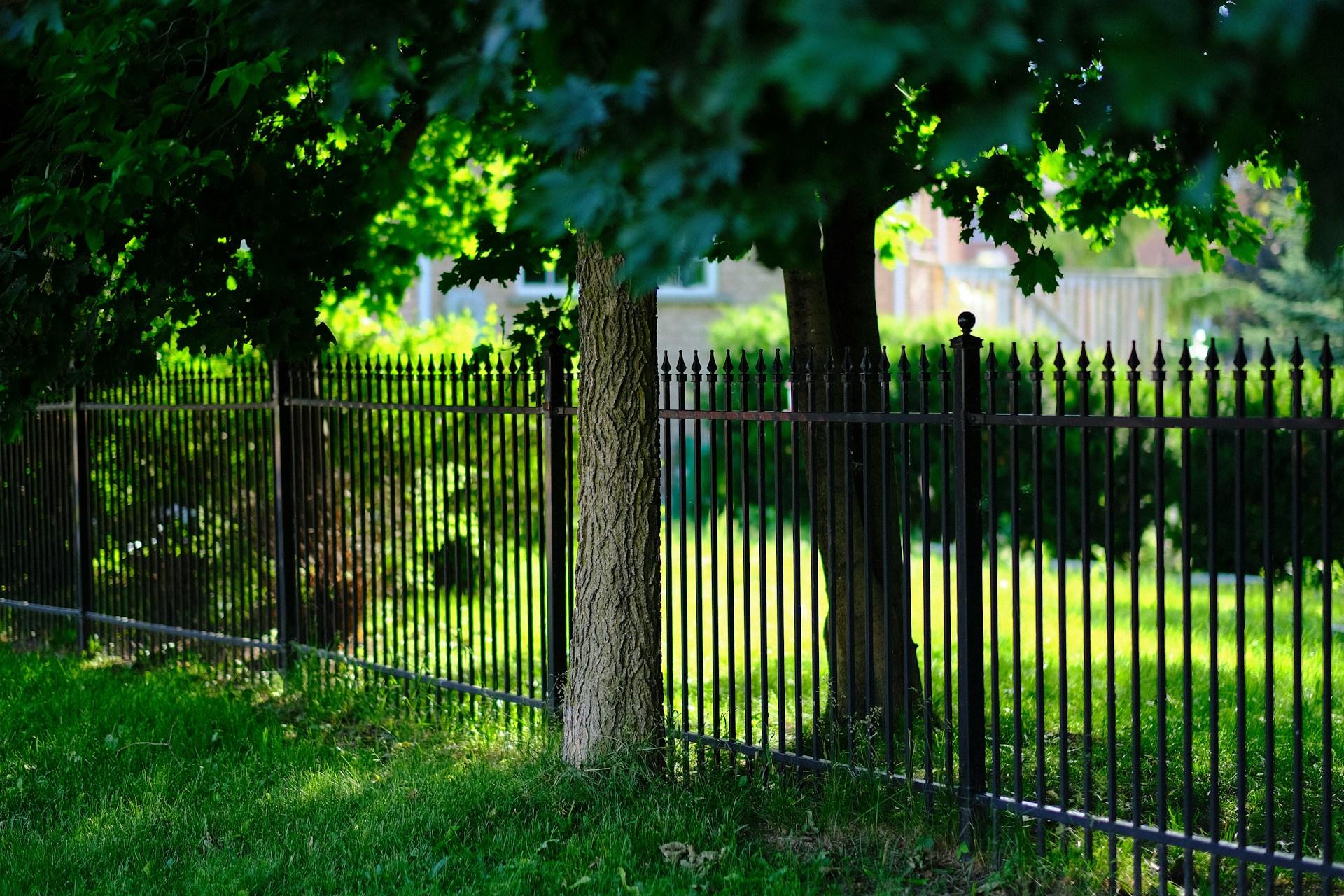
Repainting a Wrought Iron Fence: A Clean Finish That Adds Value to Your Property
A fence is often the first thing people notice about a property. A well-maintained wrought iron fence conveys care and quality; a peeling or rusty one does exactly the opposite. Repainting is therefore as much about appearance as it is about value, especially in a climate like Quebec’s, where metal takes a beating from freezing temperatures, road salt and humidity.
But a beautiful, long-lasting finish doesn’t happen by chance. From preparing the metal to choosing the colour, primer and finish, every step counts. Here’s a complete guide to getting a clean, durable result, knowing when to hand the job over to a professional, and protecting your investment over time.
Why Repaint Your Wrought Iron Fence?
Repainting a fence serves three goals at once. First, appearance: a fresh finish brings back the charm of the façade and lifts the overall impression of the property. Second, value: a well-kept entrance is one of the first things that shape how a home is perceived, especially when it’s time to sell.
Finally, and most importantly, protection. Paint is the barrier that keeps moisture from attacking the metal. Repainting at the right time prevents rust from setting in and leading to much bigger repairs, sometimes even replacing corroded sections. In other words, a fence left to deteriorate ends up costing more than one that’s maintained regularly, as our wrought iron restoration service shows.
Signs It’s Time to Repaint
A few simple clues tell you whether your fence needs a new finish or just some light maintenance.
| What you see | What it means |
|---|---|
| Peeling or blistering paint | The coating no longer protects, water is reaching the metal |
| Rust spots | Corrosion has started and should be treated before it spreads |
| Faded colour or chalking | UV rays have worn down the finish |
| Paint residue on your hands when touched | The finish is at the end of its life and has become powdery |
Rust usually shows up first in the most exposed areas: the bottom of the pickets, welding points, and areas in contact with the ground or vegetation. These are the first spots to inspect. As soon as rust appears, it’s best to act quickly: it spreads under the paint and makes repairs more complicated. Our article on how to prevent rust on exterior wrought iron covers the right prevention habits.
Which Colour Should You Choose for Your Fence?
The colour of a wrought iron fence affects both the style of the property and how well it hides signs of wear. Here are the most common choices and what they bring.
| Colour | Effect | Good to know |
|---|---|---|
| Black | Classic and timeless | A safe choice that goes with almost everything |
| Charcoal grey | Contemporary and understated | Very popular right now |
| Forest green or bronze | Blends into the landscape | Ideal in a green, leafy setting |
| White or cream | Bright, country style | Dirt shows more, needs more frequent cleaning |
The best approach is to match the fence with existing elements: the colour of the front door, trim or railings. A dark shade like black or charcoal also has the advantage of better hiding dust and small marks between cleanings.
What Makes a Clean, Long-Lasting Finish
The final result depends above all on preparation: good paint applied to poorly prepared metal won’t last. A durable finish always follows the same steps.
| Step | Purpose |
|---|---|
| Stripping or sanding | Remove rust and old peeling layers |
| Cleaning and degreasing | Ensure the primer adheres properly |
| High-solids rust-inhibiting primer | Create the protective barrier for the metal |
| Exterior gloss finish (one or two coats depending on the product) | Protect against UV rays, salt and water, and even out the look |
On a fence, pickets and ornamental patterns multiply the surfaces and corners, which makes even application more demanding. That’s where know-how makes the difference: every picket, pattern and weld point must receive enough product to be properly protected. For preparation details, our wrought iron restoration guide covers every step.
DIY or Hire a Professional?
A simple refresh on a fence in good condition can be done yourself. As soon as there’s rust, complex patterns or a long stretch to cover, the difference in results compared to a professional becomes significant.
| Criteria | DIY | Professional |
|---|---|---|
| Metal preparation | Often partial | Complete stripping |
| Complex areas (pickets, patterns) | Hard to cover evenly | Every picket carefully covered |
| Durability | 1 to 3 years | 6 to 10 years |
| Result | Variable | Uniform finish |
To figure out what’s a DIY job and what calls for a pro depending on the scope, our comparison DIY or hire a professional painter helps you decide.
Common Mistakes to Avoid
Repainting a fence seems simple, but a few pitfalls come up often and compromise the result. Knowing them ahead of time helps you avoid them.
| Mistake | Consequence | Better approach |
|---|---|---|
| Painting over untreated rust | Rust keeps spreading underneath | Remove or stabilize the rust first |
| Skipping primer | The finish peels quickly | Apply a rust-inhibiting primer |
| Painting in damp or cold weather | Poor adhesion and drying | Paint in dry weather, within the product’s temperature range |
| Applying a thin paint in too thick a coat | Drips and uneven protection | Follow the manufacturer’s thickness and number of coats |
| Neglecting the bottom of pickets and welds | Rust comes back from these areas | Cover critical points thoroughly |
What Affects the Cost of Repainting a Fence
There’s no one-size-fits-all price: the cost depends on several factors specific to each fence. Here’s what makes the bill go up or down.
| Factor | Impact on price |
|---|---|
| Length and height of the fence | More surface means more time and materials |
| Condition of the metal | Advanced rust requires more preparation |
| Pattern complexity | Ornamental pickets increase labour |
| Site accessibility | Slopes, obstacles or tight spaces make the work harder |
For a fair price, nothing beats an on-site assessment: it takes into account the actual condition of the metal and the specific features of your fence.
Ready to bring back your fence’s charm?
An on-site assessment helps determine the right approach and get a fair price based on your fence’s condition. Request your free quote or discover our wrought iron restoration service.
Real-Life Example: A Fence Before a Home Sale
Picture a property going on the market in the spring, with a peeling, rust-stained wrought iron fence along the street. It’s the first thing potential buyers see when they arrive. A targeted restoration, with stripping of rusted areas, a rust-inhibiting primer and a uniform black gloss finish, completely changes how the entrance is perceived.
The typical result: a façade that looks well cared for at first glance, without major work or replacement. On such a visible element, the ratio of effort to impact is one of the best ways to add value to a property.
Maintaining the Paint to Make It Last
Once the fence is repainted, a few simple habits extend the life of the finish: a yearly cleaning to remove dust and salt, a spring inspection to spot the first stains, and quick touch-ups as soon as a scratch appears. This light maintenance saves you from redoing everything and keeps the fence looking good longer. Our guide on maintaining a wrought iron fence details the schedule to follow season after season.
A fence ready to face Quebec’s climate
Our wrought iron specialists provide complete preparation and a durable finish, from pickets to weld points. Request your free quote for a clear picture of your project.
FAQ: Painting a Wrought Iron Fence
Can I repaint a wrought iron fence without stripping it completely?
Yes, if the existing paint is in good condition and rust-free: cleaning, light sanding and a new coat are enough. As soon as there’s rust or peeling, the affected areas must be stripped so the new finish holds.
How long does paint last on a wrought iron fence?
A DIY refresh generally lasts 1 to 3 years. A complete professional system, with preparation, rust-inhibiting primer and the right finish, lasts closer to 6 to 10 years, with simple touch-ups in between.
What paint should I use on a wrought iron fence?
We recommend industrial and professional-grade two-component products, such as epoxies and urethanes, whose high solids content forms a thick, durable coating. For a one-component option, an alkyd oil-based paint works well; latex, however, is not recommended as a topcoat on rusted metal in Quebec. To choose the right product, see our guide on exterior metal paint.
What colour should I choose for a wrought iron fence?
Black remains the classic choice, followed by charcoal grey for a more contemporary look. Dark shades have the advantage of hiding marks between cleanings. Ideally, match the colour with the front door and the trim of the house.
When is the best time to repaint a fence?
Spring, summer and early fall all work well: you need dry weather and a temperature within the range indicated by the manufacturer. Two-component professional products (epoxy and urethane mastic) can be applied between 2 and 40 °C, which extends the season compared to oil-based paints. Spring is also a good time to spot and fix damage left by the winter.
Should I spray or brush-paint my fence?
The two are often combined. Spraying gives a uniform finish and reaches hard-to-access pickets and patterns, while a brush is used for touch-ups and precise areas. On an ornamental fence, thick professional coatings (epoxy, urethane) are generally applied by brush and roller, which makes it possible to fully cover every picket and every weld.
Does repainting a fence increase property value?
Indirectly, yes. A clean, well-maintained fence improves first impressions and the overall curb appeal of the property, two factors that weigh on how a home is perceived, especially when reselling.

What our customers say













No comment yet, add your voice below!